Applied improvisation. The methodology, not the comedy show.
Applied improvisation borrows the principles that make improv work: listening, presence, status calibration, accepting offers under pressure. It uses them to build professional skill. It is the discipline behind how high-stakes teams keep building on each other when the plan stops working, and it is old enough to have its own academic society. Nobody performs comedy. Nobody gets on a stage.
Three things happen in the room
Listening past the first sentence.
Most professionals are queueing their response by word four. The room makes that habit visible, then makes it expensive, then trains it out.
Building on an idea instead of replacing it.
The default move in most rooms is to wait for an opening and pitch your own version. We train the harder move, which is making someone else's idea land better than they could alone.
Making the call without the data you wanted.
Decisiveness as a muscle, not a personality trait. Reorgs, lost deals, board questions nobody prepared for. The room rehearses the recovery, not the script.
The room is genuinely funny. That is the mechanism, not a side effect. Skeptical professionals do not change behaviour because a slide tells them to. They change it when they are loose enough to try something in front of colleagues and find out it worked.The laughter is the door. The behaviour change is the room.
A few questions before you keep scrolling.
- When was the last time your senior team practised listening without already drafting their reply?
- When was the last time a manager publicly changed their mind in front of their direct reports, and it landed as strength instead of weakness?
- When was the last time someone made a confident decision with incomplete information and the room backed them instead of second-guessing?
If you can name the date, you probably do not need us yet. If you cannot, that is the gap we fill.
That ten seconds is the entire problem. It is not a communication problem and it is not a culture problem. It is a reflex, and reflexes are trained.
You have already paid for that ten seconds this quarter.
It is in the decision that took three meetings instead of one. In the project that shipped late because nobody said the quiet thing early. In the person who stopped offering, because the last time they offered it went nowhere. None of it arrives as a line item, which is exactly why it keeps happening.
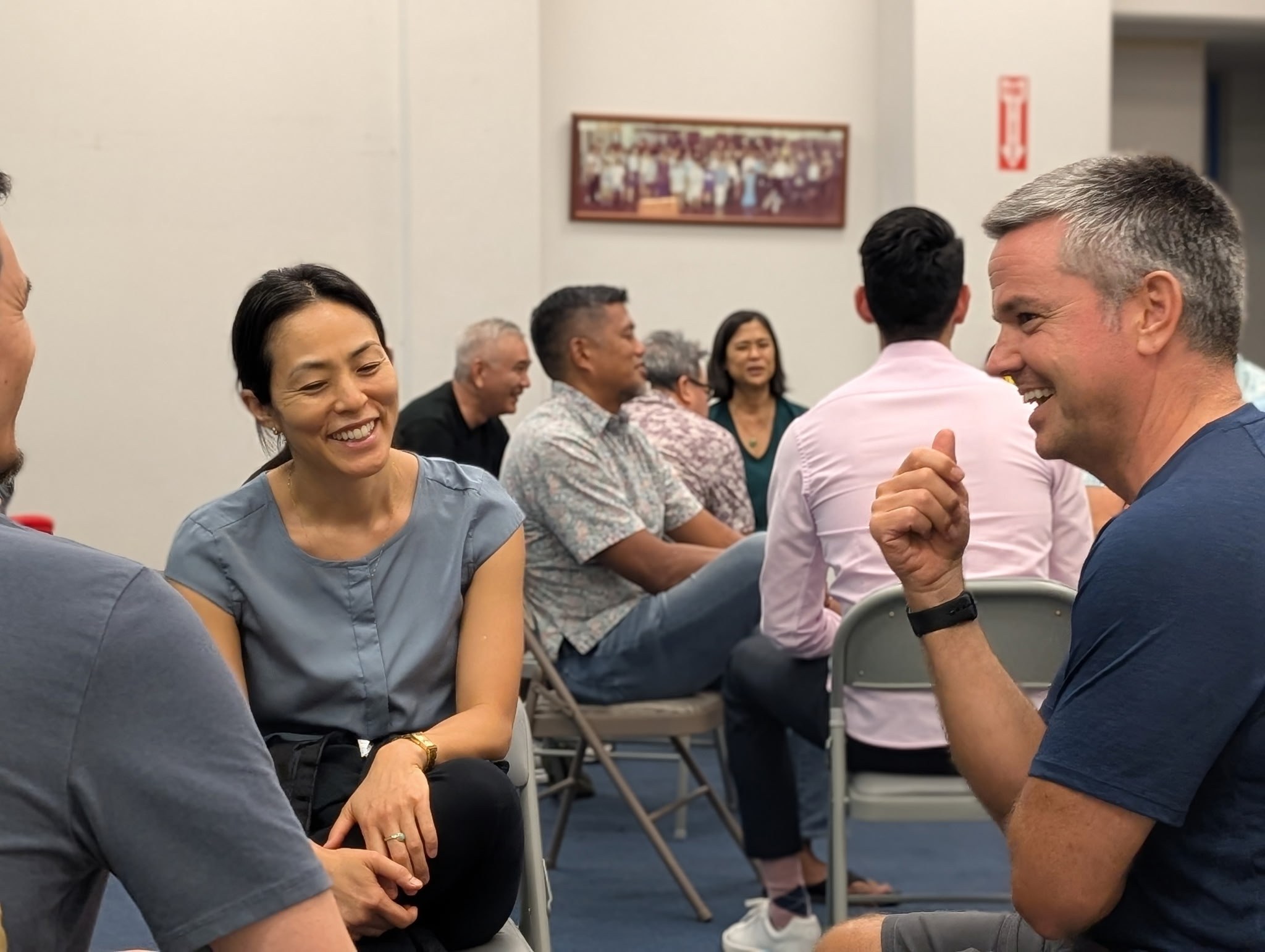
The whole room, talking to each other, at the same time.
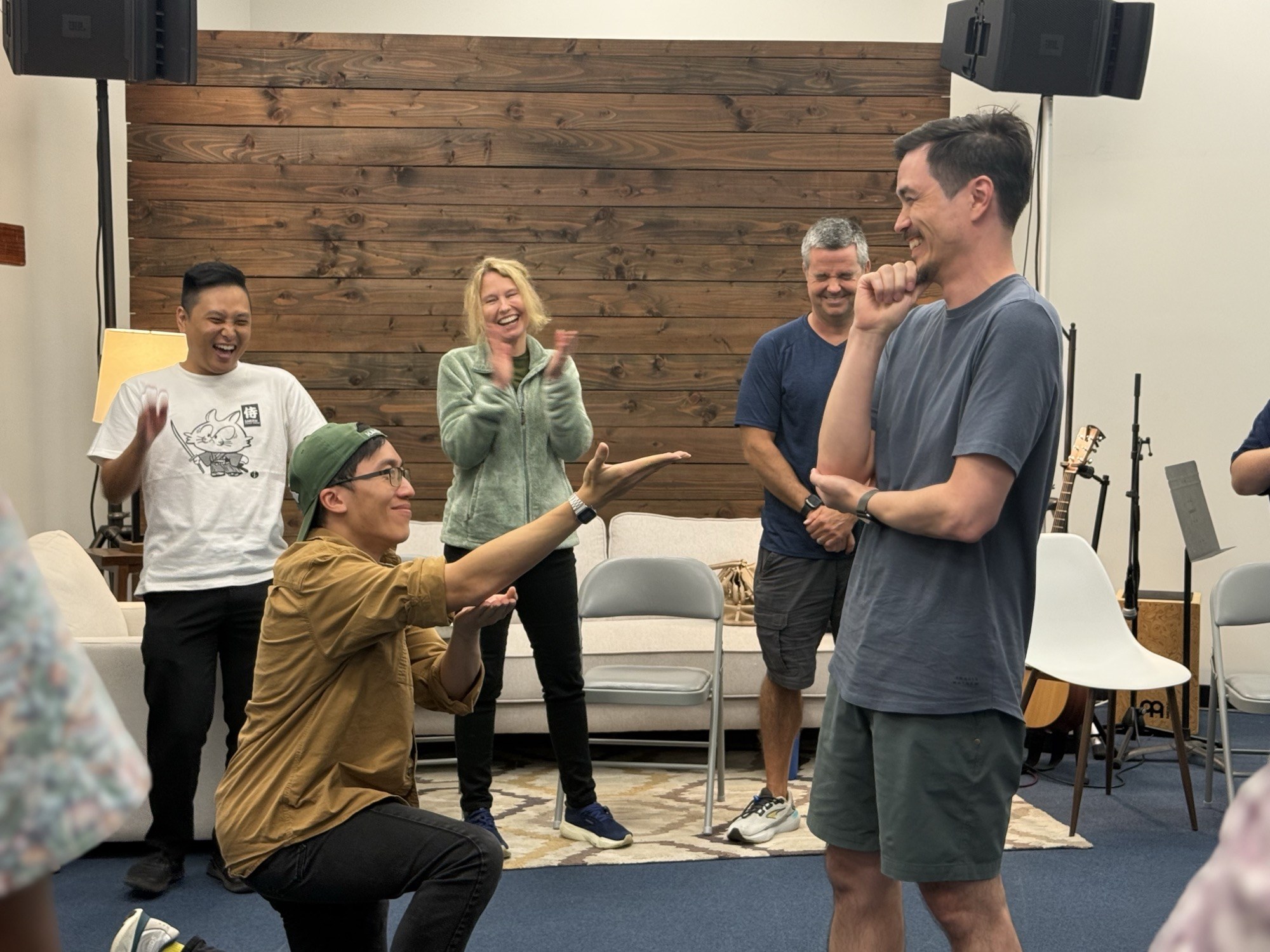
He is committing to a choice in front of people who outrank him.
“Our participants who went through both training courses shared that they wildly preferred And Scene.”
Collaborative Intelligence
Group-thinking foundations.
Adaptive Leadership
Leading through uncertainty.
Generative Problem-Solving
Ideation before commitment.
Navigating Change
Rehearsal for transitions.
The Art of the Pitch
Reading the room.
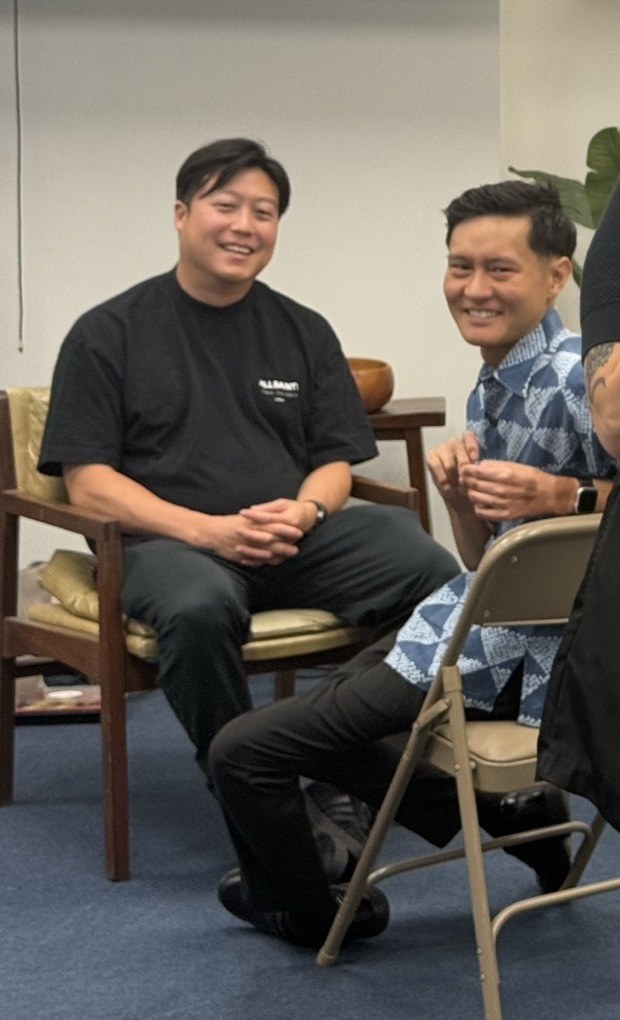
The door, mid-open.
The number on the call is the number that stands.
A 25% deposit locks your dates and the balance is due Net 30. This is our founding-client rate, held for our first five corporate logos. We do not discount to win the deal.
Two hours, ten people, one facilitator. The smallest honest way to find out.
Fifteen people, four modules, two facilitators. Design, materials, debrief guides and the 30-day follow-up included.
Three cohorts, forty-five people. Design is built once and reused.
Is this improv comedy training?
No. We do not teach improv. We use improv to teach everything else. Applied improvisation borrows the principles that make improv work, listening, presence, status calibration, accepting offers under pressure, and uses them to build professional skill. Nobody performs comedy. Nobody gets on a stage.
How much does a session cost?
Pricing is published openly. A two-hour pilot session for ten people is $8,000. A four-module cohort program for fifteen people is $36,000, and a full rollout of three cohorts is $88,000. Program design is built once and reused, so each cohort after the first costs less. A 25% deposit secures engagement dates and the balance is due Net 30. This is our founding-client rate, held for our first five corporate logos.
Who is the training designed for?
Four tiers, calibrated from individual contributor through C-suite. Foundation for individual contributors and associates. Ensemble for managers and team leads. Director for upper management and VPs. Producer for C-suite and executives. Each tier uses the same methodology with scenarios calibrated to the audience's actual professional dynamics.
What does a standard session look like?
Standard format is a four-hour session, with multi-day formats available. A pilot session runs to ten people and a cohort is fifteen, which is the sweet spot for ensemble work. The structure moves from low-stakes calibration exercises into targeted skill drills, into structured scenarios that mirror the professional dynamics the team faces, and closes with each participant naming a specific behavior they will use back at work.
Has a large organization actually hired And Scene?
Yes. Bank of Hawaii's SVP Director of Learning and Development, Therese Dickerson, directly compared our program to a top-tier mainland vendor and reported that participants who went through both training courses wildly preferred And Scene. The full quote is published on the homepage.
How is this different from team building?
Team building optimizes for shared experience. Applied improvisation optimizes for transferable skill. A scavenger hunt creates a story your team tells later. A session creates behavior change your team uses in the next meeting. Both are valid. They are different products with different deliverables.
Do you serve clients outside Hawaii?
Yes. And Scene is based in Honolulu but the engagement footprint is national. Hawaii companies get a local-rate engagement with no travel surcharge. Mainland companies hire us for specific programs and we travel to them. The methodology is identical in both directions.
The next time a senior person is wrong, somebody should say so.
Thirty minutes with Lance or Carl. Bring your hardest question about why this would not work inside your org. We will either give you a real answer or tell you we are not the right fit.
And scene.